







PULL PLANNING SOFTWARE
Nialli™ Visual Planner: Build better together
Get the pull planning software that keeps construction projects on track and team collaboration strong.
Collaboration from anywhere
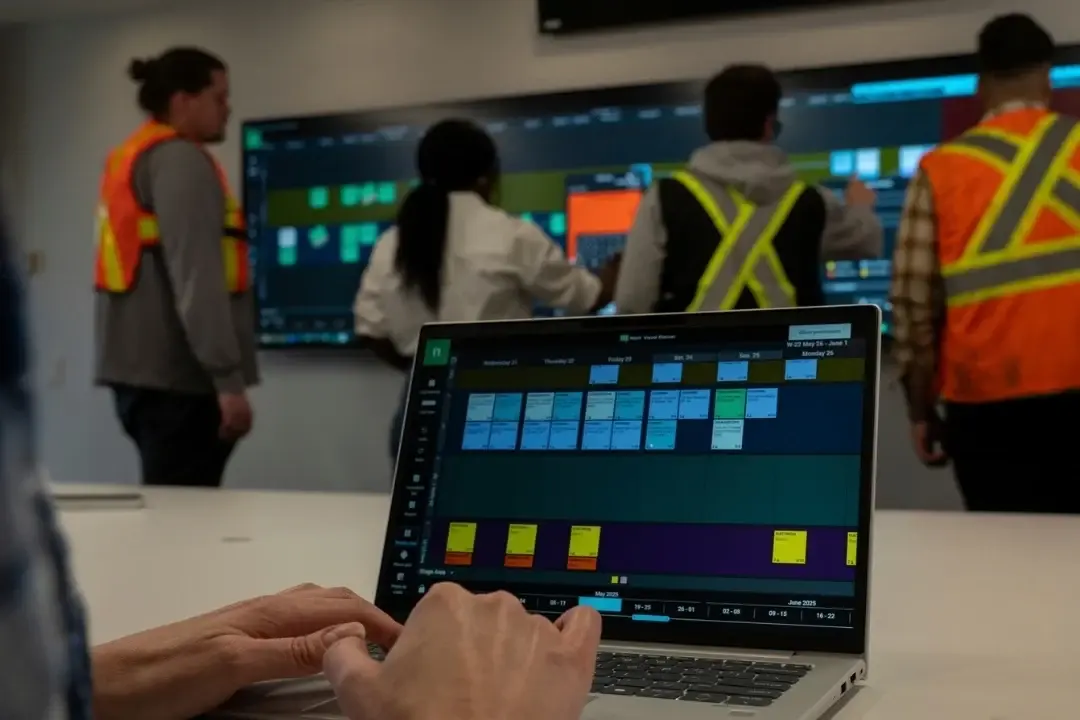
The live plan is accessible from any location and any device. Fully web-based, no downloads are required. Use Nialli Visual Planner on interactive displays, computers, tablets and mobile phones.
Built for the Big Room
Nialli Visual Planner is purpose-built for multiscreen interaction. It can be extended across two or three interactive displays for an immersive digital pull planning experience. Multiple users can interact with it simultaneously.
Site-level simplicity
Projects are hectic enough without tech complexity thrown in! Drag-and-drop gestures make Nialli Visual Planner as easy to use as sticky notes, so trade contractors can learn it in minutes.
Visual Planner pull plan software features

Start with what you know
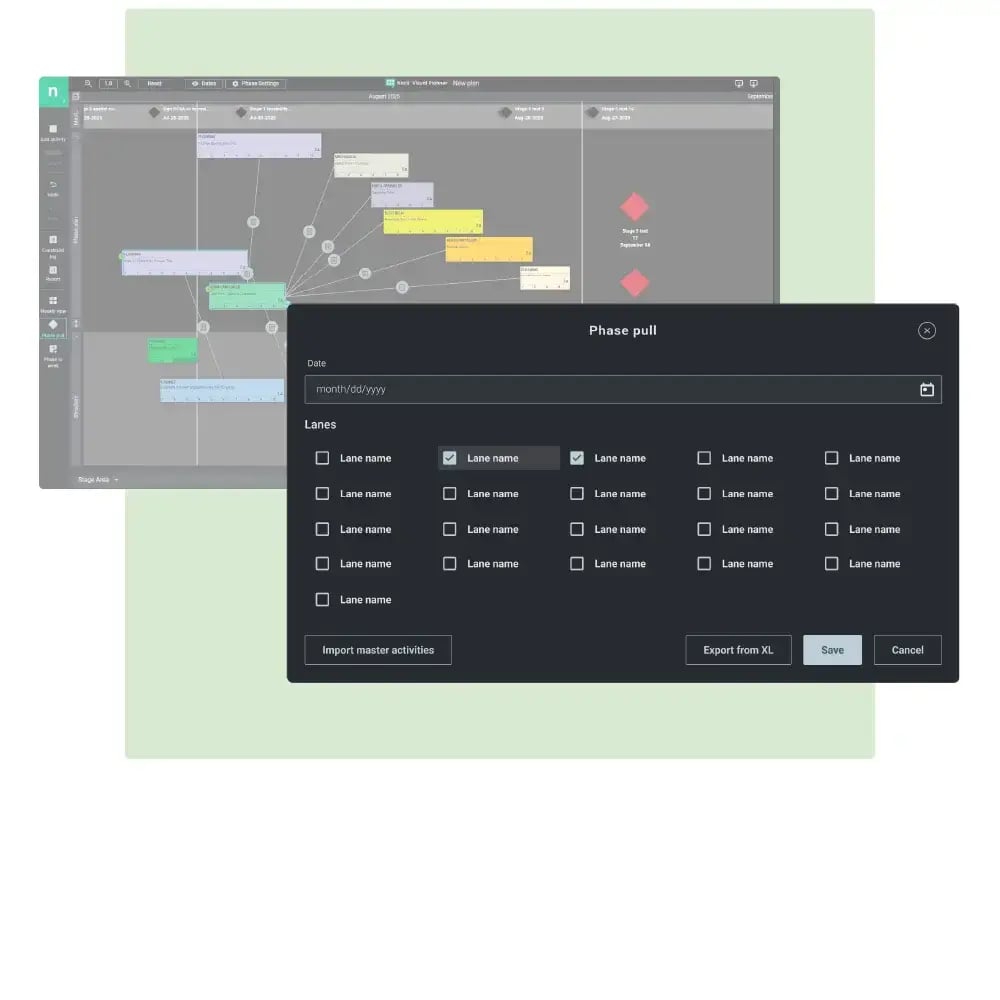
Get started quickly by importing key milestones and activities from your master schedule (Oracle® Primavera P6, Microsoft® Project, Asta Powerproject®, etc.).
Build your pull plan
Add finer details using drag-and-drop functionality to build a visual map of planned work over the next 6–8 weeks of the project.
Shift to weekly planning
Use the phase-to-week mode to drag activities from your phase plan directly into your weekly work plan. Add new details and constraints as work draws nearer to its start date.

Create tasks from anywhere
Assign each trade with a different color tag for visibility. Multiday activities can easily be created. Trade contractors can place their upcoming tasks in the staging area ahead of planning meetings.
Drag and drop cards
Drag the tags where you want them to go in the plan. It’s easy on an interactive display — a single touch will move one tag at a time and two fingers will move a stack of cards.
Track work completed
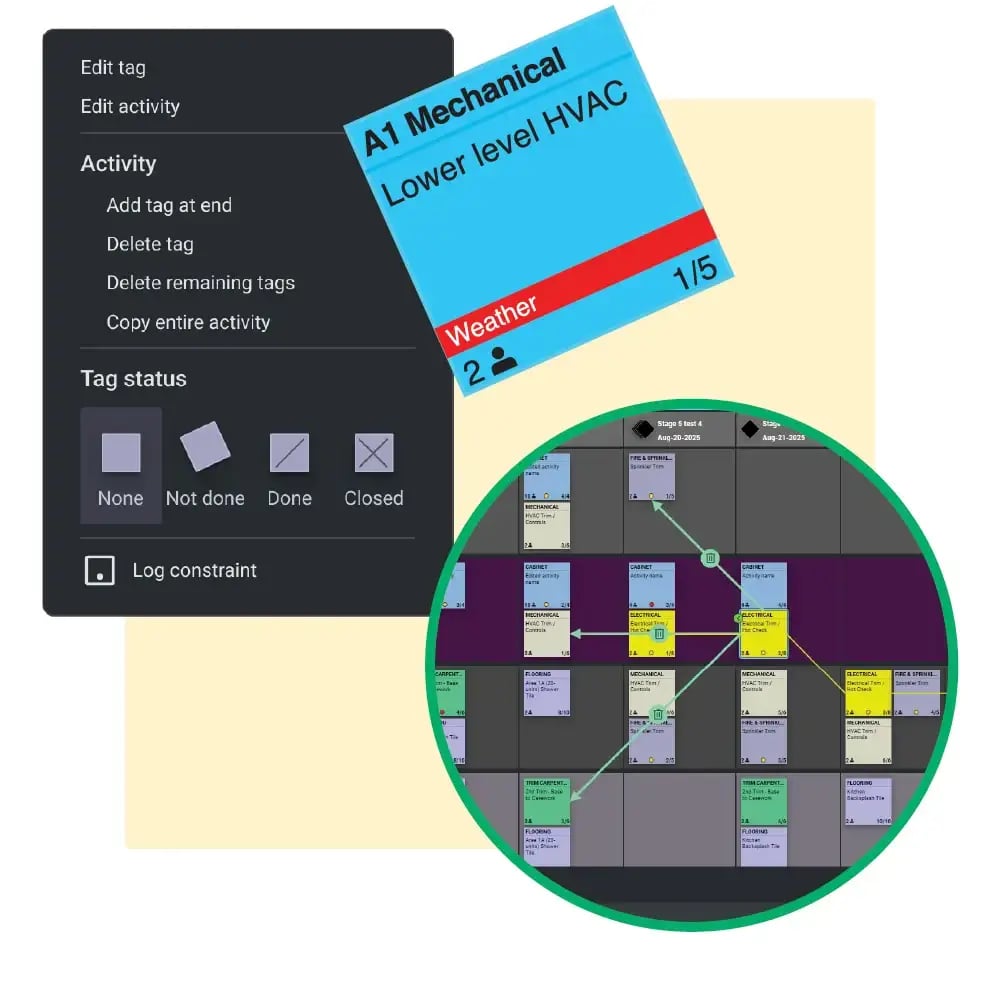
Use simple twist gestures to mark work as complete or incomplete. When a task is marked as incomplete, the user is prompted to select a reason why (reasons for variance). The data gets captured in the background for reporting!
Show dependencies
Avoid surprises by creating visual links between tags. Draw an arrow from the corner of one tag to connect it with another. If a task gets marked as incomplete, the connection lines turn red and a warning dot appears.

Mobile and tablet view
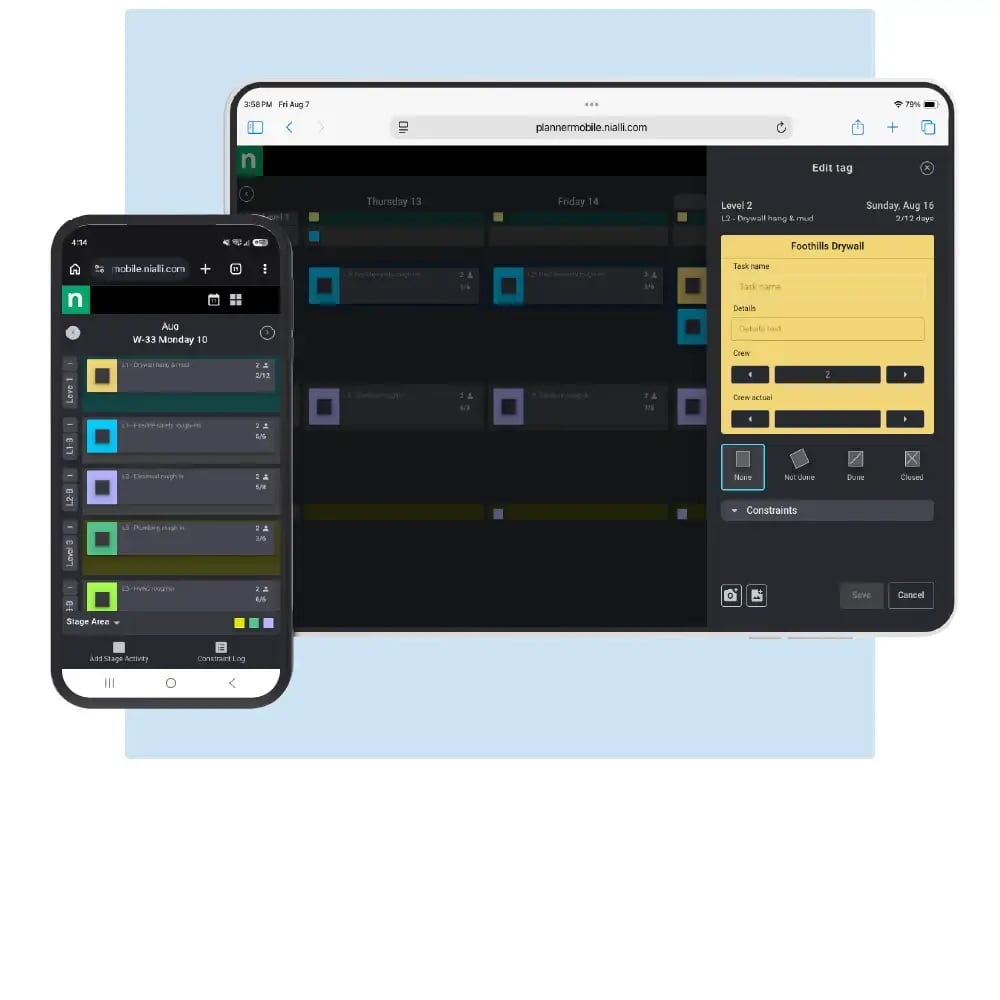
No pesky app downloads! When you open the application in a browser on a mobile phone or tablet, you will automatically be routed to Nialli Visual Planner’s field view.
Built for on-site contractors, this view allows users to see their upcoming work, line up activities in advance of meetings, track work progress and capture photos.

In-app reporting
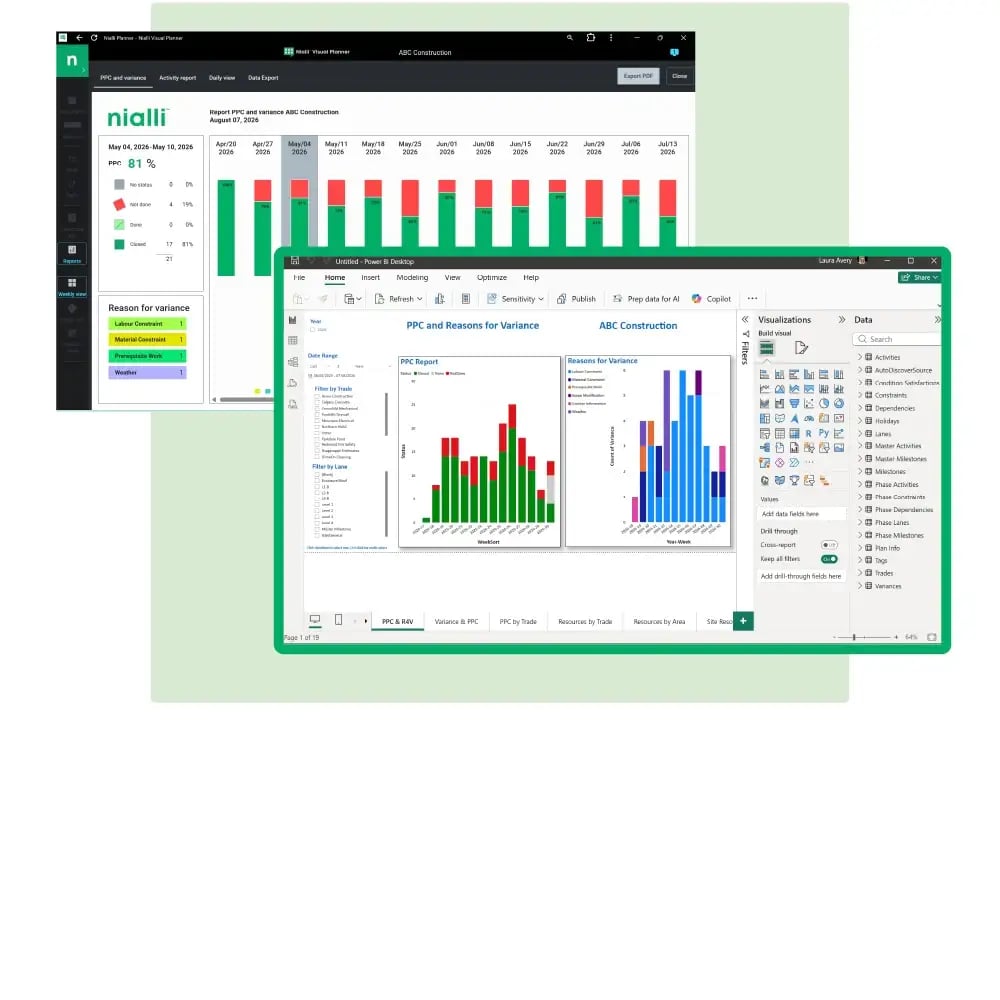
Data is automatically captured as users work. You can generate an instant report on weekly PPC (Percent Plan Complete) and reasons for variance (reasons why tasks weren’t completed). Activity and daily reports can also be created in the app.
Power BI reporting
Nialli Visual Planner integrates directly with Microsoft Power BI for advanced data analysis. Prebuilt reports drill into metrics like PPC by trade, planned versus actual crew size and variance from the master schedule. You can also create custom reports and link to other data sources.
Nialli API
You can get access to automated, live data from Nialli Visual Planner through our outbound API. Contact our support team for access.
.jpg?width=1000&height=1000&name=nialli-features-overview-page-admin-1000x1000%20(1).jpg)
Single sign-on (SSO) & multi-factor authentication (MFA)
Nialli Visual Planner supports integration with third-party identity providers for single sign-on and multi-factor authentication, including Okta Workforce Identity, Google Workspace™ and Microsoft Entra ID.
Nialli administration portal
Managing multiple subscriptions? The Nialli administration portal gives you a bird’s eye view of active subscriptions, plan administrators and the status of your subscriptions. You can also manage a global list of trades and reasons for variance.
Built for the Big Room
Transform your site trailer or meeting space with digital planning. Our software is optimized to work on interactive displays.
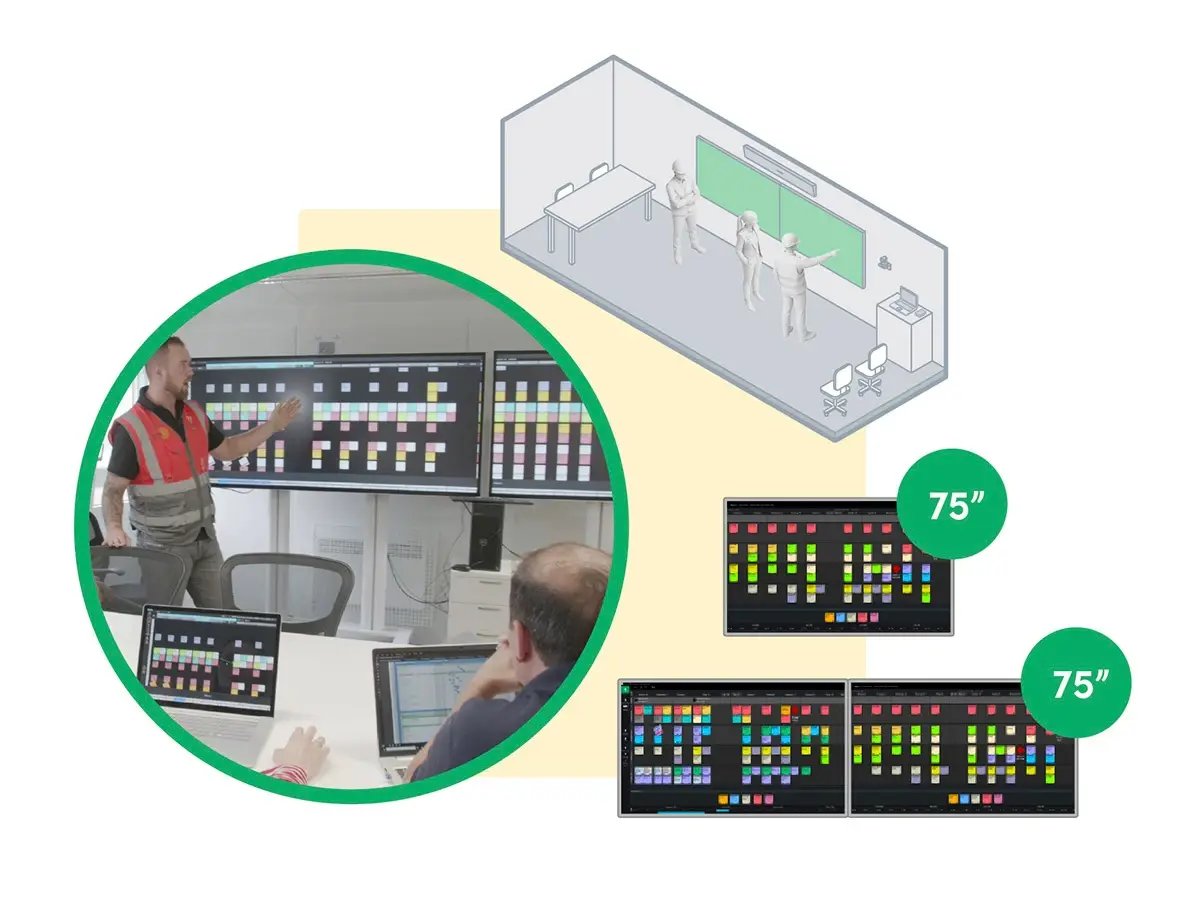
Small site office
Approximate room dimensions: 8' x 24' (2.4m x 7.3m)
A compact site trailer or small office space best accomodates a single or dual 75" display (190.5 cm) for collaborative planning. Combine with Nureva® audio and cameras to enable remote participation.
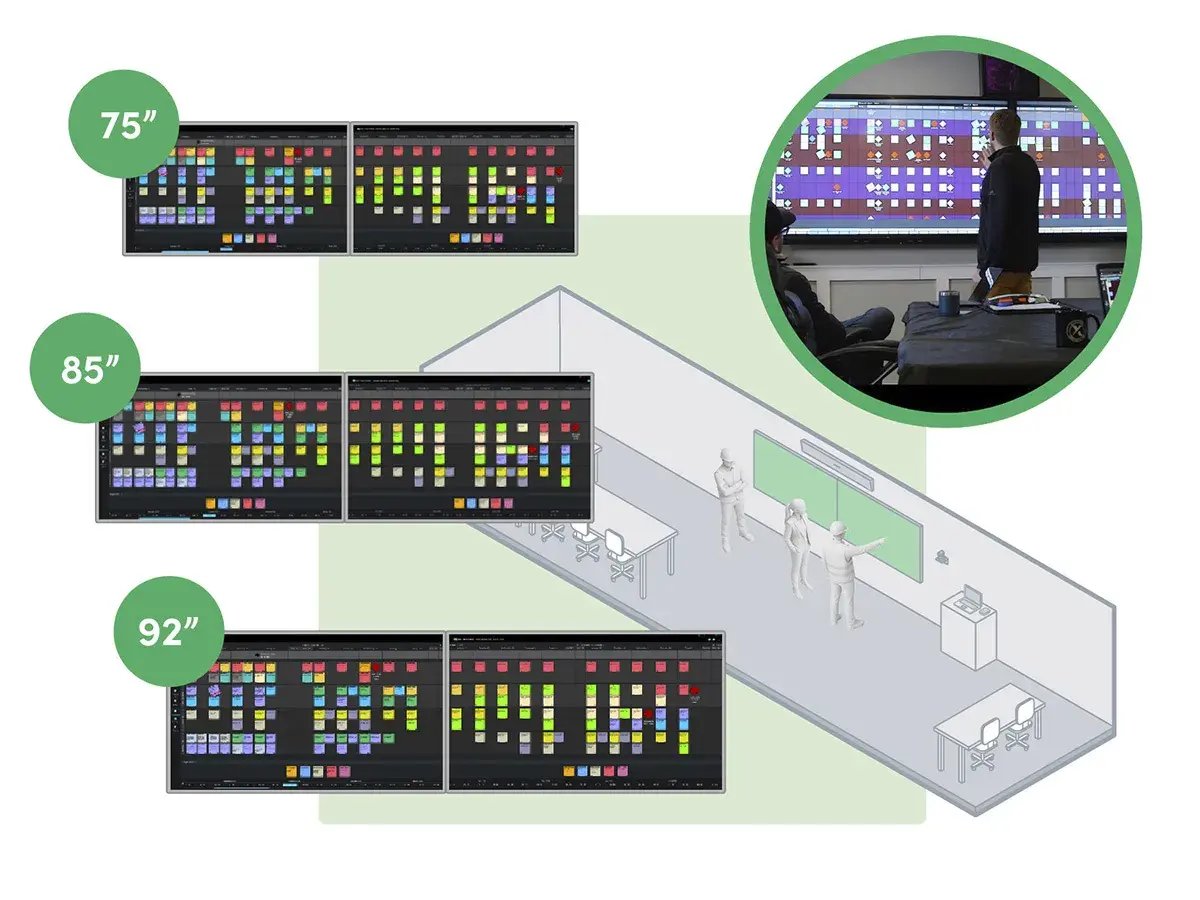
Standard site trailer
Approximate room dimensions: 10' x 40' (3m x 12.2m)
A standard site trailer easily accommodates multiple Nialli Visual Planner configurations, depending on your team size and room layout. Use one or two 75" displays (190.5cm), 85" displays (215.9cm) or 92" displays (233.7cm). Combine with Nureva® audio and cameras to enable remote participation.
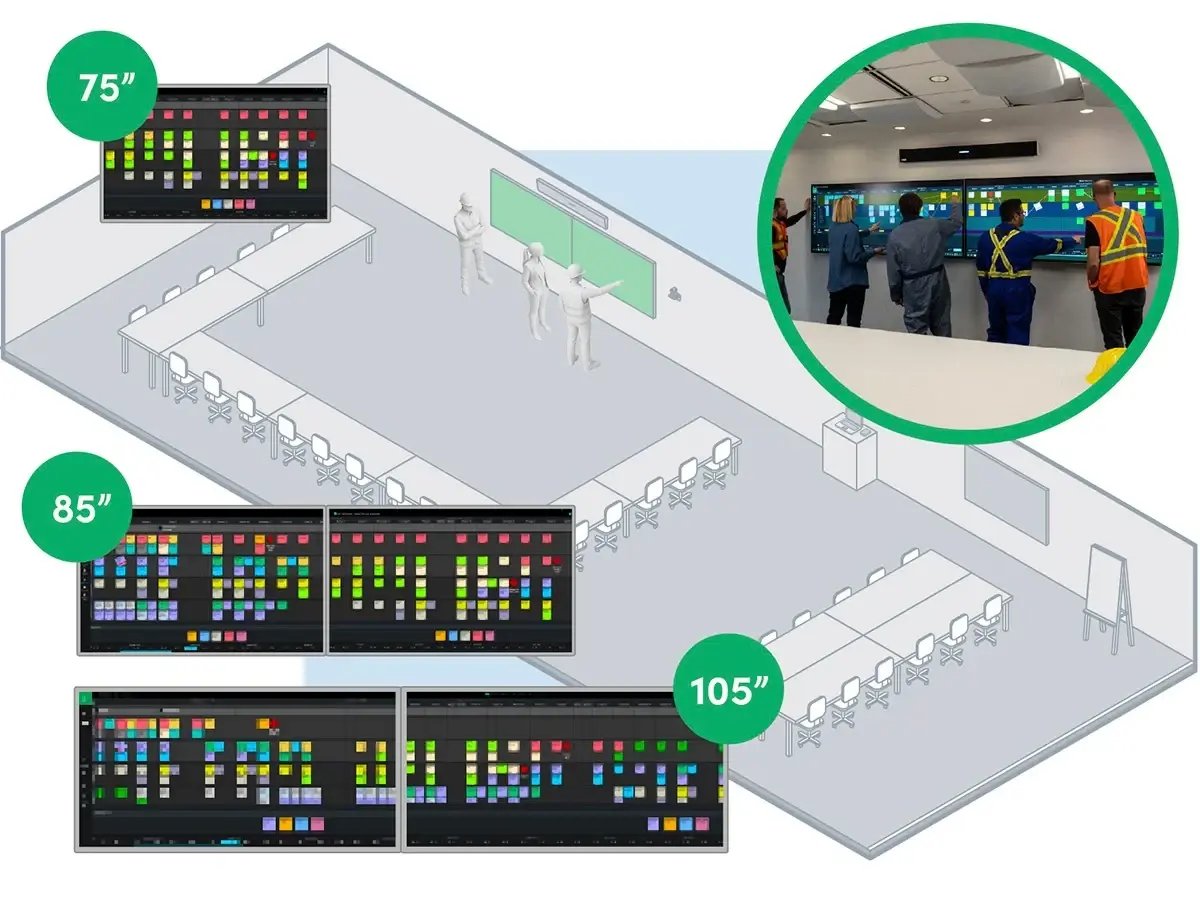
Double-wide site trailer
Approximate room dimensions: 24' x 64' (7.3m x 19.5m)
A double-wide site trailer or classroom-sized space for Big Room planning provides ample room for a dual or triple display setup. Combine three 75" displays (190.5cm), two 85" displays (215.9cm) or two 105" displays (266.7cm) for an immersive wall-to-wall planning experience. Add Nureva audio and cameras to enable remote participation.
How are customers using Visual Planner?
Willmott Dixon is reshaping how construction projects are planned and delivered by going digital without losing the human touch. Discover how their teams are using Nialli Visual Planner’s collaborative pull planning software to improve communication, streamline workflows and boost productivity across the board.
Explore visual planning use cases
Implementing Nialli digital pull planning software
Every Nialli subscription includes basic onboarding, live support by phone and email, and access to the Nialli Knowledge Hub — a self-serve library of how-to guides and training content. If your team needs more hands-on help getting started, an advanced onboarding and implementation package is available as an add-on.
For direct assistance, contact the support team Monday to Friday, 9 a.m. to 5 p.m. MT. You can also submit feature requests directly to the product team through the support site.
Frequently Asked Questions
-
What is pull planning in construction?
Pull planning is a collaborative scheduling method rooted in Lean construction principles. Rather than project managers pushing a schedule down to field teams, pull planning works backward from a target completion date. Construction teams, trade contractors and other stakeholders map out the required steps together, identifying tasks and assigning responsible parties based on what can actually be delivered. Everyone involved helps build the plan from the beginning, so you get genuine buy-in and a clear understanding of what needs to happen before work starts.
-
How is pull planning different from push planning or the critical path method?
The critical path method (CPM), used in tools like Oracle Primavera P6 and Microsoft Project, builds a project timeline from the top down. Project managers set milestones and assign work based on what the master schedule says should happen, but a schedule developed during preconstruction can’t account for unexpected delays, trade coordination issues and site realities that emerge once construction is underway. Pull planning works backward from the completion date, with construction teams building the schedule themselves, so potential issues get surfaced at the planning meeting rather than discovered on site.
-
What is the Last Planner System, and how does Nialli support it?
The Last Planner System (LPS) is a proven Lean construction framework that bridges the gap between a contractual master schedule and the real-world progression of work at the jobsite. It organizes construction planning into connected layers: milestone planning, phase pull planning, lookahead planning and weekly work plans, each feeding into the next. Nialli Visual Planner supports every phase of the Last Planner System in a single Lean pull planning software platform, so your construction teams can run pull planning sessions, build a phase plan, manage lookahead planning and commit to weekly work plans on one canvas that automatically captures data for continuous improvement.
-
How does pull planning software work?
Pull planning software provides construction teams with a shared digital workspace for collaborative planning sessions. Starting from project milestones or a target completion date, your full team works backward to map out every required step, with trade contractors and the general contractor assigning responsible parties and flagging dependencies before work begins. Nialli Visual Planner replicates the familiar feel of sticky notes on a construction pull planning board, with drag-and-drop cards and a visual canvas your whole team can access from any device, so everyone stays informed whether they’re on-site, in the office or joining remotely.
-
What is a phase plan, and how does lookahead planning connect to it?
A phase plan maps all the tasks required to complete a major section of a construction project, translating high-level project milestones from your master schedule into a detailed work sequence with assigned responsible parties for each step. Lookahead planning then zooms into the next 3 to 6 weeks of that phase plan, giving construction teams enough lead time to identify potential delays before they hit the schedule. Weekly work plans pull from the lookahead, turning upcoming commitments into specific tasks with clear completion targets. In Nialli Visual Planner, all three layers connect on the same canvas, so nothing falls through the gaps between planning horizons.
-
How do construction teams track progress and measure continuous improvement?
Every time a task is marked complete in Nialli Visual Planner, the platform automatically captures that data, with no manual transcription after the meeting. Field teams get instant field reporting on Percent Plan Complete (PPC) and the specific reasons tasks weren’t finished on time, giving project managers and superintendents a live view of the project’s status. More detailed data can be extracted using Nialli’s integration with Microsoft Power BI, allowing for deeper analysis across time or a portfolio of projects.
Over time, that data drives continuous improvement: You can identify where the planning process breaks down, adjust how your teams approach planning on the next project and use real project progress data to track the positive impact that Lean principles are having on project outcomes.
-
Does Nialli integrate with our existing master schedule?
Nialli Visual Planner works alongside your master schedule rather than replacing it. During preconstruction or at the start of a phase, you can import contractual obligations and project milestones directly from your CPM schedule (Oracle Primavera P6 or Microsoft Project), anchoring your pull planning canvas to the commitments already in place. The pull planning process then translates those high-level milestones into ground-level task plans that reflect what your construction teams can actually deliver, while your master schedule remains intact for contractual reporting.
-
How is Nialli different from physical sticky notes or traditional construction pull planning boards?
Physical construction pull planning boards run out of wall space on larger projects, can’t include remote participants and require someone to transcribe everything after every planning session. Using Nialli Visual Planner on interactive displays gives your construction teams the same hands-on experience of working with sticky notes, including drag-and-drop cards and a twist gesture to mark tasks complete, on an infinite digital canvas. Dependency indicators flag potential delays the moment a task falls behind. Data is captured automatically as your teams plan, and project managers get a live construction project dashboard showing project progress without manual effort.
-
How does pull planning reduce waste on construction projects?
Pull planning reduces waste by uncovering problems early rather than discovering mistakes afterward. When trade contractors build the schedule themselves by working backward from the completion date, they identify conflicts and dependencies before they cause delays, meaning fewer workers arriving to find prerequisite work isn’t done and fewer last-minute schedule changes. Tracking the reasons tasks don’t get completed, a core part of the Last Planner System and built into Nialli Visual Planner automatically, feeds continuous improvement across construction projects so your teams identify areas to improve the construction process on every project.
-
How do trade contractors access Nialli Visual Planner?
Trade contractors join a Nialli planning session by creating an account over email. No app download or IT setup is required. We offer role-based access so anyone on your project can work within the plan from a phone, tablet or laptop to contribute tasks to the staging area, update their work status and participate in pull planning sessions from any location. Because access is instant, your general contractor and trade contractors are all working from the same live plan from the beginning of the project, which is the foundation of coordination that keeps construction teams fully informed.