
 Alan Boykiw
What is Big Room Planning? (And how to do it better digitally.)
Big Room planning brings multidisciplinary construction teams together to align schedules, identify constraints and map dependencies...
|
Despite the rise of sophisticated digital tools, sticky notes still remain a staple in construction planning. This is largely due to sticky notes being tactile and easy to use. Learn more about why Post-it® notes still dominate construction planning and what factors to consider when searching for software alternatives, including communication, flexibility and visualization. |
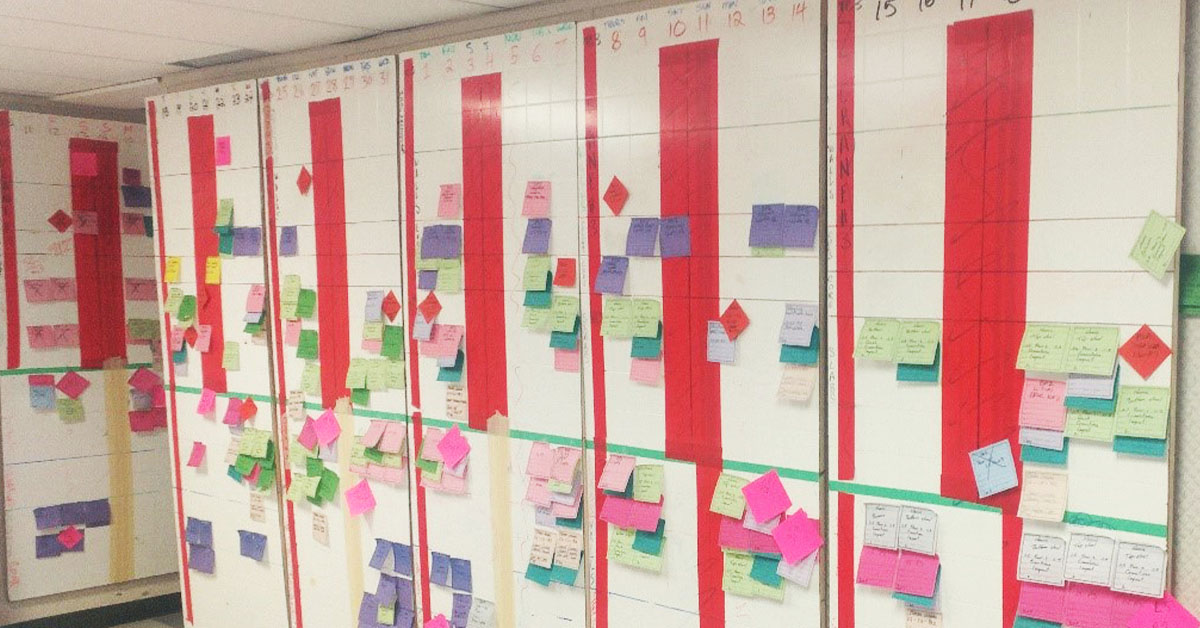
When I walk into a construction jobsite trailer or a planning Big Room, I see laptops, tablets, smartphones, large wall displays and … STICKY NOTES!
Despite all the digital transformation happening on projects, it seems surprising that these vibrantly colored squares of Post-it® paper remain a staple in project planning and collaboration.
So, why are sticky notes still popular in construction? And how can we hold onto the advantages that make them so well loved, even as we transition to digital tools?
Here are 4 things to look for when evaluating if digital software will deliver the same benefit as sticky note planning on paper:
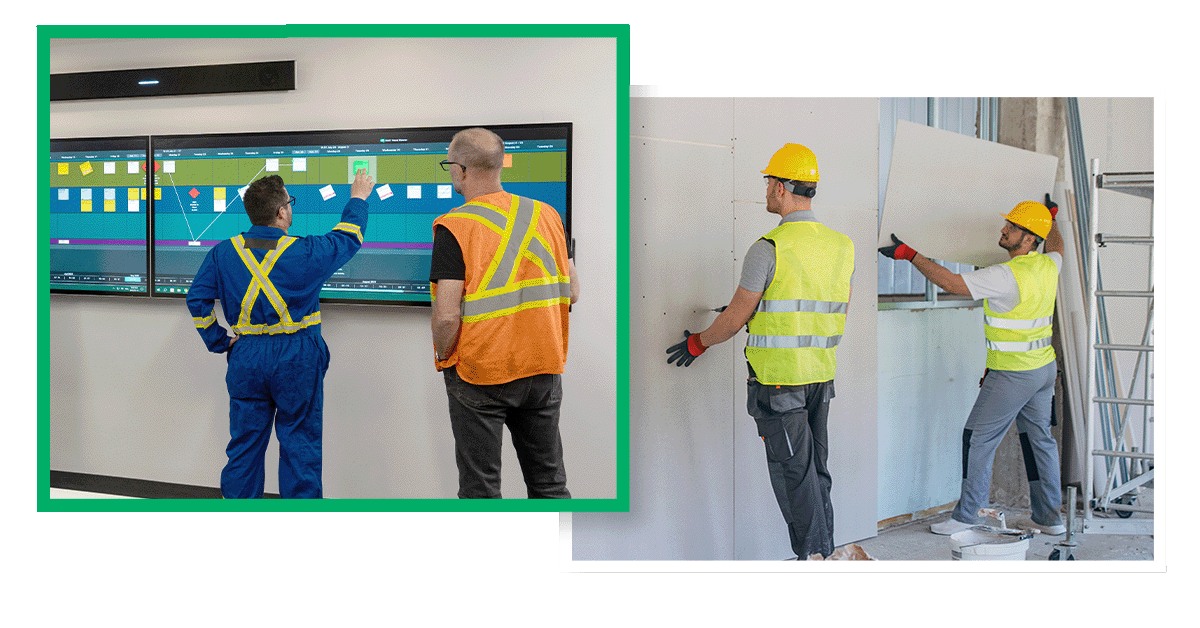
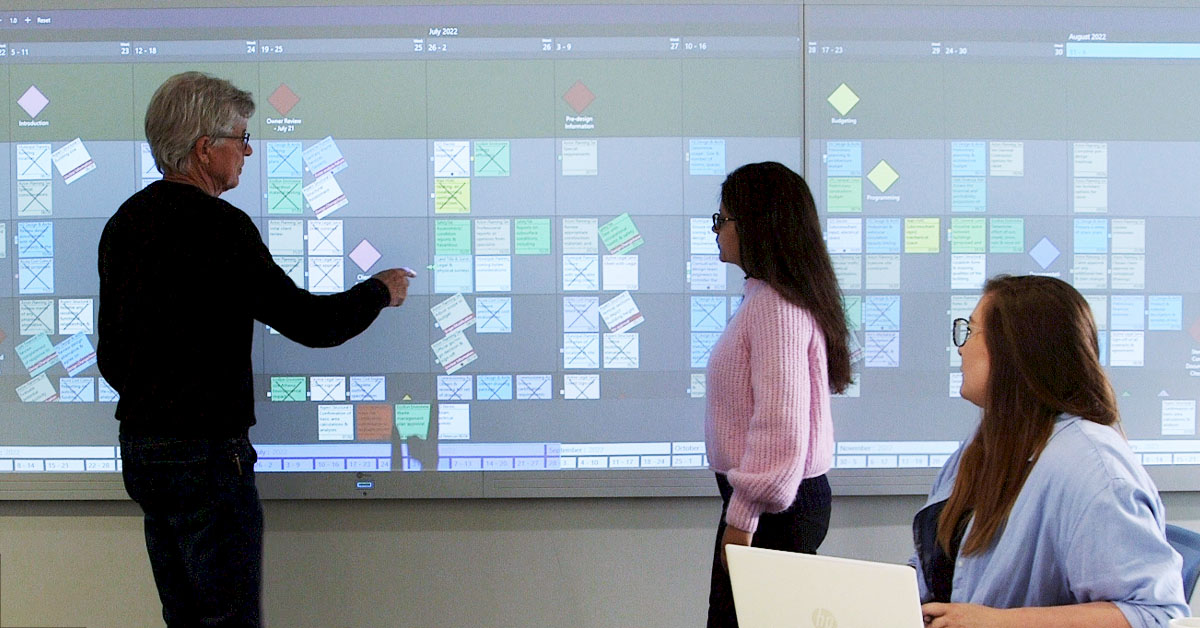
Construction projects are inherently complex, involving multiple phases, stakeholders and moving parts. Sticky notes on a physical or digital wall serve as a tangible and visual way to map out and unpack this complexity. They allow project teams to mutually see and understand the project’s scope, progress and critical milestones — immediately.
Digital enhancements can make sticky notes even more effective in their use — but only when simplicity is maintained. By including cohesive colors and making note creation quick and intuitive, the digital experience can build on familiar paper-based processes. When organizing these notes on a wall, project managers and teams can more easily create a high-level flow of tasks and dependencies. This visual representation of a project plan helps stakeholders, from site managers to subcontractors, to see and understand their roles and timelines.
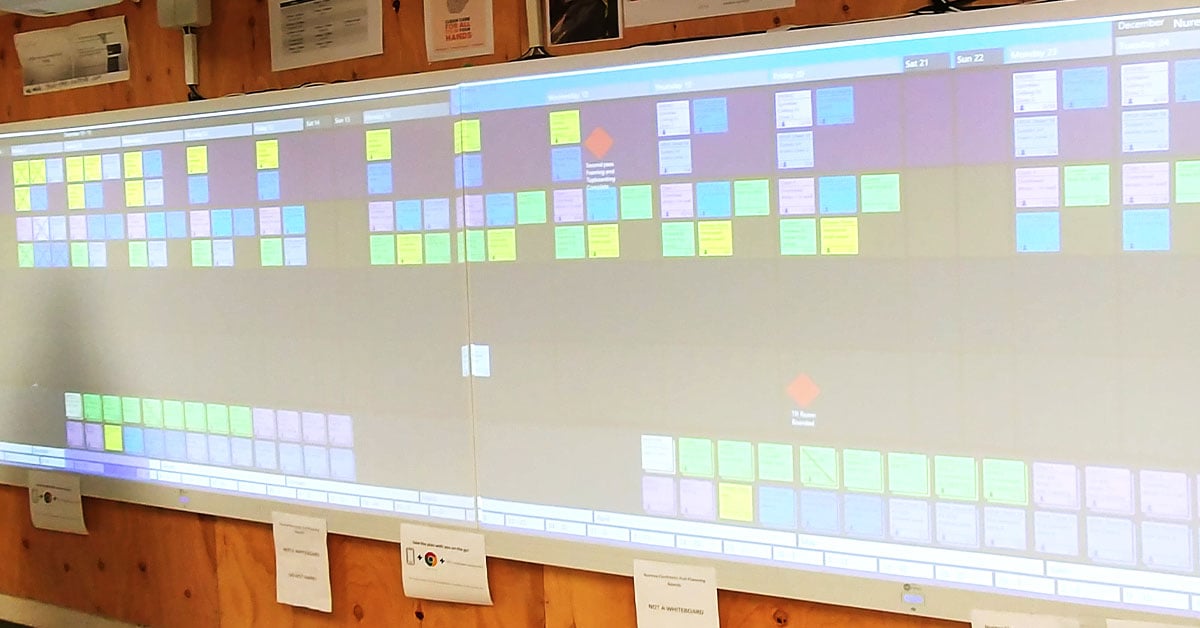
One of the most significant advantages of using sticky notes in construction project planning is the way it promotes collaboration and ownership. Sticky notes bring team members together in real time, encouraging everyone to participate actively in the planning process. All members become equal contributors in sticking their activity notes on a wall, reinforcing their commitments to the team.
Paper sticky note sessions create a sense of ownership and inclusivity by involving the entire team, from project managers to engineers and site workers.
Taking sticky note planning digital can further open channels of communication by bringing remote participants into the conversation. Everyone can contribute their insights or raise potential challenges.
However, software can present challenges if it is not used in the correct way. It's essential to use tools that maintain the shoulder-to-shoulder collaboration that makes paper pull planning so effective. If the software hinders this or requires users to work off a desktop instead of together, going digital will create more communication problems than benefits.
An important aspect of construction projects is constant change, bringing with it the need to resolve problems. Unexpected challenges often arise, requiring adjustments to schedules, tasks and priorities. Sticky notes are inherently flexible — they can be moved around the wall, rearranged or removed to create a new plan and manage any disruptions.
But there’s one drawback with paper sticky notes — filling out and moving groups of them can be time-consuming and tedious.
Creating, moving and changing activities is much easier using software. You can see way farther into the past or further, as well as map out alternative paths to completion. However, some applications make this process easier than others. Look for solutions that are simple and easy for field teams to use - being able to quickly re-arrange tags on an interactive display or update plans from mobile devices will make transitioning from paper to digital much easier.
Sticky notes bring a human-centered element to construction project planning. In a field dominated by technical drawings, contracts and complex software, sticky notes offer a refreshing simplicity that everyone can relate to. No learning is required to hold a pad of notes and writing an activity on them creates a personal commitment. Sticky notes help make the planning process more approachable, reducing the intimidation factor of large-scale project planning software and fostering a more inclusive environment.
When going digital, it’s crucial that the personal connection isn’t lost. Digital sticky notes need to be simple so there’s no learning curve to get in the way of easy adoption. It also helps to have an interactive wall so trades can move their own activities and status them as done or not done. The status of noted activities generates data, such as Percent Plan Complete (PPC), that can be analyzed so teams understand what they might do to plan and build in a better way.
While construction project planning and collaboration are becoming increasingly digitized, sticky notes remain a powerful, low-tech solution. Their flexibility, simplicity and ability to foster communication make them indispensable tools for construction teams. Whether it’s for organizing tasks or tracking progress, sticky notes — paper or digital — continue to play a vital role in the successful execution of construction projects.
Sticky notes might seem small and simple, but in construction, they’re a big part of making things happen and getting work done.
Looking for a digital version of sticky notes? Start a free 30-day trial of Nialli™ Visual Planner.
Big Room planning brings multidisciplinary construction teams together to align schedules, identify constraints and map dependencies...

Large-scale data center projects demand careful coordination because of their schedule-sensitive nature. Yet, effective collaboration isn’t...
The Last Planner® System (LPS®) transforms construction scheduling by shifting from rigid, top-down master plans to collaborative,...
.jpg)
1 min read
How can contractors modernize Lean construction practices without losing the simplicity and interaction of physical planning boards? Learn how...
1 min read
Construction is a hands-on occupation, so why isn't construction planning? By making construction planning processes more tactile and...
1 min read
Digital construction planning teams today expect their software applications to be intuitive, efficient and valuable from day one. In my role as a...