
 Alan Boykiw
What is Big Room Planning? (And how to do it better digitally.)
Big Room planning brings multidisciplinary construction teams together to align schedules, identify constraints and map dependencies...

| Why do large construction projects fail? Discover key takeaways from Bent Flyvbjerg's "How Big Things Get Done," including the "Think Slow, Act Fast" philosophy. Learn how how strategies like hiring a master builder, improving team integration and leveraging visual planning can eliminate costly rework and ensure project success. |
I recently read a book called How Big Things Get Done: The Surprising Factors that Determine the Fate of Every Project from Home Renovations to Space Exploration, and Everything in Between by Bent Flyvbjerg.
As I read through the examples of projects gone wrong or right, he reinforced some of the observations that we’ve made with respect to how our customers are successful on construction projects, especially large and complex builds. I think this book is a must-read for project managers, superintendents, business leaders and anyone involved in ambitious building initiatives.
Flyvbjerg, an expert in project management and decision-making, combines real-world case studies — from architecture to infrastructure and entertainment — to reveal patterns in project success and failure. He uses many examples of well-known buildings and projects that make reading the book interesting and his ideas understandable.
His data-driven approach challenges conventional wisdom, emphasizing that optimism bias and strategic misrepresentation often derail even the most well-intended initiatives. The book highlights the importance of starting small, learning from past projects and embracing modularity to avoid common pitfalls like cost overruns and delays.
What I thought was of great value was his 11 heuristics — rules of thumb for successful project completion — that he’s compiled from decades of studying big projects. Here are a few of my favorites:
Master builder is a term that historically referred to a person responsible for both the design and construction of a building or large project. In ancient and medieval times, master builders were skilled artisans, architects and engineers who oversaw all aspects of a project, from planning to execution.
Flyvbjerg discusses the idea of a master builder, emphasizing the importance of experienced leadership and integrated decision-making in ensuring large projects succeed. If you’re building a dam, you probably want someone leading the team who’s built a dam before!
Ed Catmull is quoted in the book as saying: “Give a good idea to a mediocre team, and they will screw it up. Give a mediocre idea to a great team, and they will either fix it or come up with something better. If you get the team right, chances are they will get the ideas right.”
It’s the job of a master builder to lead the formation of the team. Chances are pretty good that a team formed in this way will deliver.
I’m fond of asking why when working on the design of products. It forces us to focus on what matters, what the purpose is and what the end result will be. As projects progress, changes, events and details don’t shake progress toward the ultimate goal. If you ask why, you will most likely find your North Star.
Flyvbjerg writes, “What’s the worst that can happen during planning? Maybe your whiteboard is accidentally erased. What’s the worst that can happen during delivery? Your drill breaks through the ocean floor, flooding the tunnel. You have to dynamite months of work on the opera house, clear away the rubble, and start over. Your overpass collapses, killing dozens of people. And so much more.”
We hear the same from our customers. Rework is expensive and demoralizing, and good planning is critical for predictable and controlled execution. A well-thought-out plan created by the people who are doing the work is a vital step toward a successful project outcome.
Digital tools make it easier for teams to tackle large, complex builds and avoid costly rework. Find out how Nialli can help you plan your next project.

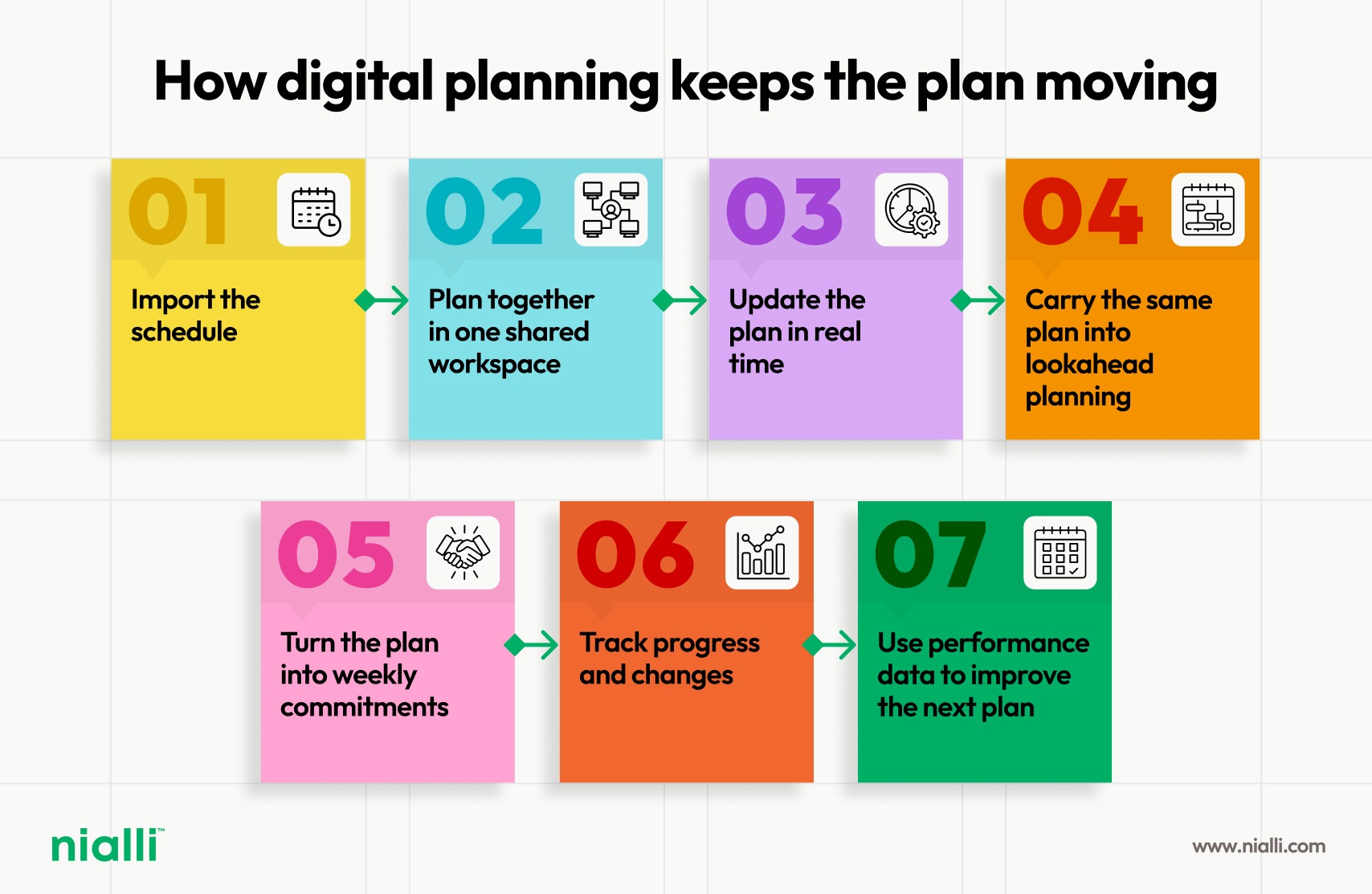
Big Room planning brings multidisciplinary construction teams together to align schedules, identify constraints and map dependencies...

Large-scale data center projects demand careful coordination because of their schedule-sensitive nature. Yet, effective collaboration isn’t...
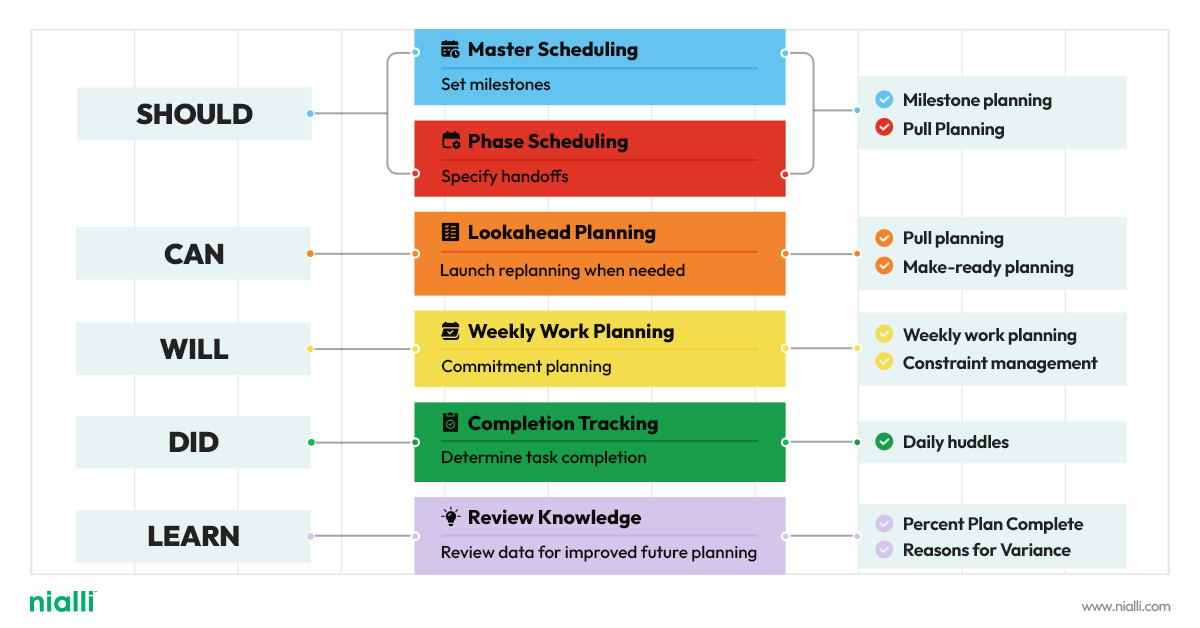
The Last Planner® System (LPS®) transforms construction scheduling by shifting from rigid, top-down master plans to collaborative,...

1 min read
In construction, things move fast. That’s why it’s so important to create pathways for project excellence. Lean construction practices support teams...

1 min read
When it comes to project management and planning, those working in construction know the grind better than anyone. Whether you’re out in the field or...
1 min read
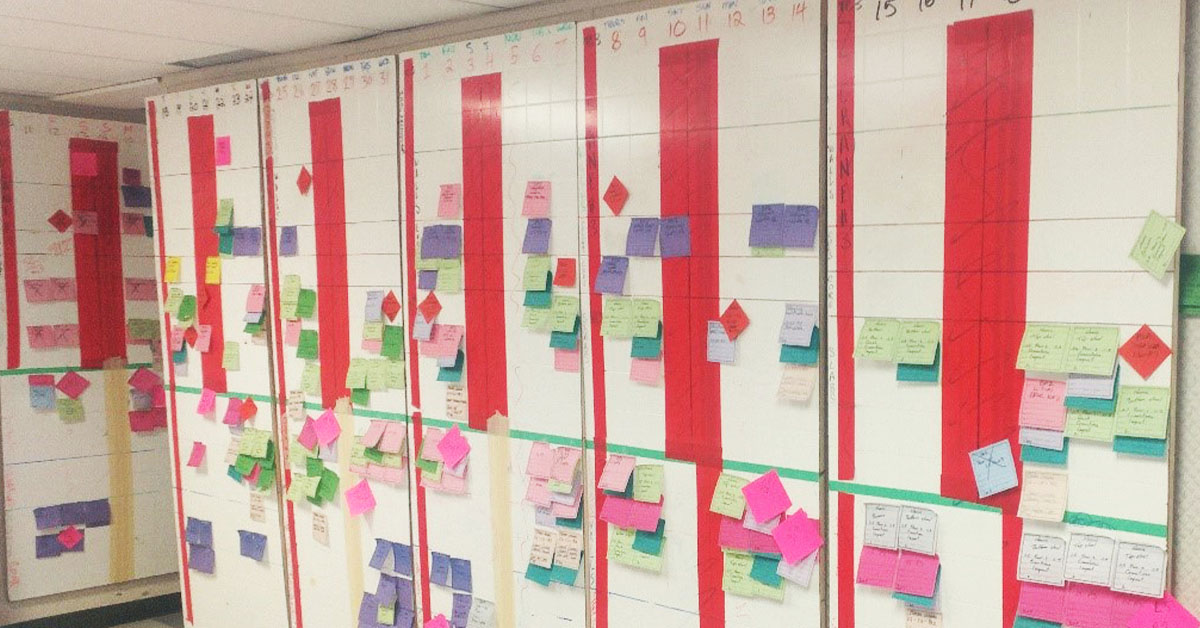
Despite the rise of sophisticated digital tools, sticky notes still remain a staple in construction planning. This is largely due to sticky...